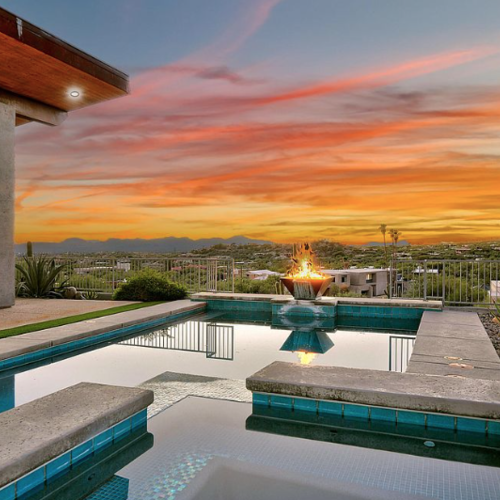





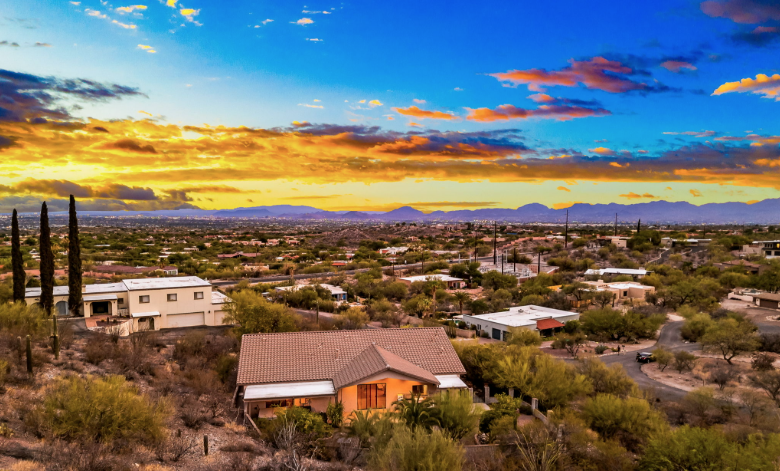
The Catalina Foothills can look almost unreal after a summer storm.
The mountains darken. The desert turns greener. Clouds hang over the Santa Catalinas, and the temperature can drop just enough to make a patio feel irresistible.
For a home buyer, though, this time of year can reveal something even more useful than a beautiful view:
how a property handles water.
That matters in the Foothills.
Many homes in this part of Tucson sit on sloped lots, near natural drainage areas, along hillside roads, or on properties with extensive desert landscaping. During long stretches of dry weather, it can be difficult to imagine what happens when heavy rain arrives.
Late summer gives buyers a chance to look for clues.
If you're considering buying a home in the Catalina Foothills, here are some of the things worth noticing after monsoon storms.
Why Monsoon Season Matters When You're House Hunting
A sunny showing tells you what a house looks like on a nice day.
A recent storm can tell you how the property behaves when conditions aren't perfect.
That doesn't mean buyers should panic when they see water marks, drainage channels, washed gravel, or damp soil.
The goal is to understand what's normal for the property and what may deserve further investigation.
After a storm, buyers may be able to see:
- Where water naturally flows
- Whether roof drainage appears effective
- Whether gravel or soil has washed away
- How the driveway handles runoff
- Whether low areas collect water
- Whether retaining walls show signs of stress
- How landscaping responds to heavy rain
Those observations can lead to better questions during the inspection and due-diligence process.
1. Look at the Driveway Before You Look at the Kitchen
In the Catalina Foothills, a driveway can be much more than a place to park.
Some properties have steep approaches, long private drives, shared access, or driveways that cross natural drainage paths.
After heavy rain, look closely.
Has water carved channels through gravel?
Is there sediment across the driveway?
Do you see fresh erosion near the edges?
Are there culverts or drainage structures?
If the driveway is steep, how would it feel during heavy rain?
This becomes especially important if the road or driveway is privately maintained.
A beautiful hillside property can be a great fit, but buyers should understand the practical side of getting to and from it.
2. Follow the Water
Here's a simple trick when touring a Foothills home:
Stand outside and ask, "Where would the water go?"
Start at the roof.
Follow the roofline to gutters or scuppers.
Then look at where that water lands.
Does it flow away from the house?
Does it cross a patio?
Does it collect next to a wall?
Does it head toward a wash or drainage channel?
A property doesn't need to be completely flat or perfectly dry to function well.
In fact, many desert properties are designed around natural water movement.
What matters is whether drainage appears intentional and whether there are signs that water is reaching places where it shouldn't.
3. Washes Are Part of the Landscape—Understand Them
Natural washes are common throughout the Tucson area and can be especially noticeable around Foothills properties.
During dry weather, a wash may look like little more than a sandy depression covered with desert plants.
After a storm, its purpose becomes much clearer.
If a property is near a wash, don't automatically assume that's a problem.
Instead, investigate.
Where is the wash in relation to the house?
Is it part of a larger drainage system?
Does access to the home cross it?
Are there structures close to it?
What does current flood information show for the property?
If a wash or drainage feature is important to your decision, use official information and qualified professionals to understand the specific property rather than relying on appearance alone.
4. Hillside Homes Can Reveal More After Rain
One of the attractions of the Catalina Foothills is elevation.
Higher lots can provide privacy, dramatic architecture, and sweeping views.
They can also create additional questions about terrain.
After monsoon rain, take a closer look at slopes around the home.
Look for fresh erosion, soil movement, drainage paths, exposed roots, or areas where landscaping has shifted.
If the property has retaining walls, notice whether there are visible cracks, leaning, staining, or signs of water pressure.
None of these automatically indicates a major problem.
But they're worth pointing out to your inspector or another appropriate professional.
Hillside homes are highly property-specific.
Two houses only a few streets apart can have completely different terrain and drainage conditions.
5. The Roof Can Tell a Story After a Storm
Foothills homes come in a wide variety of architectural styles.
That also means you'll encounter different roofing systems.
After recent rain, ask whether there are any known leaks or repairs.
Inside the house, look for staining around ceilings, windows, skylights, and exterior walls.
Outside, consider how roof drainage works.
Flat or low-slope rooflines can be common in Southwestern architecture, but the important question isn't whether a roof "looks flat."
It's whether the roof system is in good condition and moving water where it's supposed to go.
A professional inspection can help buyers understand the visible condition and identify areas that may require specialized evaluation.
6. Check Patios and Outdoor Living Areas
Outdoor living is a major reason many buyers are drawn to the Catalina Foothills.
Covered patios, courtyards, pools, mountain views, and desert gardens can become some of the best parts of the home.
But after monsoon storms, those areas can reveal useful information.
Look for standing water.
Check whether patio surfaces slope appropriately.
Notice whether water is collecting near doors.
Look at retaining walls, steps, drains, and transitions between landscaped areas and hardscape.
If there's a pool, look for debris patterns or evidence that runoff enters the pool area.
A gorgeous patio should work during more than just perfect weather.
7. Desert Landscaping Can Change Quickly After Rain
The Foothills are known for natural desert landscaping.
That can include saguaros, palo verdes, mesquite, native shrubs, rock, gravel, and drought-tolerant plants.
Monsoon rain can expose weak spots in the landscape.
Gravel may wash out.
Tree limbs can break.
Soil can erode.
Irrigation lines may become exposed.
If the property has mature desert vegetation, pay attention to placement and condition.
A large tree close to a structure can create shade and beauty, but it may also deserve professional evaluation if it appears damaged or unstable after a storm.
The same is true for cacti and other large plants.
8. Mountain Views Are Great—But Check What's Under Your Feet
Foothills buyers can become understandably distracted by the scenery.
You walk onto the patio.
The Catalinas fill the horizon.
The sunset starts changing color.
And suddenly the house feels perfect.
This is exactly when you should remember to look down.
What does the lot actually look like?
How does it slope?
Is the outdoor space usable?
Where does water travel?
Are there steps, retaining walls, steep walkways, or difficult access points?
A mountain view is an incredible feature.
But the lot still has to work for your lifestyle.
9. Ask About Storm-Related Repairs
After monsoon season, buyers have a natural opportunity to ask about recent property maintenance.
Were roof repairs made?
Was storm damage addressed?
Did any trees come down?
Was erosion repaired?
Were drainage improvements added?
Has the driveway required work?
If documentation is available, review it.
This isn't about assuming something went wrong.
It's about understanding how the property has been maintained and what kinds of repairs may be part of owning it.
A well-maintained home can still have a history of repairs.
In fact, responsible maintenance can be a positive sign.
10. Check the Garage and Lower-Level Areas
Water doesn't always show up where you expect.
If the property has a garage, lower-level room, storage area, or basement-like space, inspect those areas carefully.
Look for moisture staining.
Notice unusual odors.
Check around exterior doors.
Look at walls near grade level.
If something appears recently painted or repaired, ask why.
Again, one sign isn't proof of a larger problem.
The goal is simply to give your inspector good questions to investigate.
11. Visit After a Storm If You Can
If you're serious about a Catalina Foothills property and conditions allow it, visiting after a recent storm can be extremely informative.
You don't need to tour during dangerous weather.
Wait until conditions are safe.
Then look at:
- Roads
- Driveway access
- Drainage
- Washes
- Gravel
- Patios
- Landscaping
- Roof runoff
- Neighboring slopes
This can show you things you may never notice during a dry-season showing.
It can also help you understand whether the property feels manageable to you.
12. Don't Assume Every Foothills Property Has the Same Risks
The Catalina Foothills cover a large and varied area.
Some homes sit on relatively level lots.
Others are built into hillsides.
Some back to natural desert.
Others sit in established subdivisions.
Some have long private drives.
Others are easily accessed from neighborhood streets.
That's why broad statements about "Foothills homes" only go so far.
The smartest approach is always property-specific.
Inspect the individual home.
Research the individual lot.
Understand the individual drainage pattern.
Then decide whether that particular property fits your comfort level.
What Buyers Should Ask Before Making an Offer
When touring a Foothills property after monsoon season, these are useful questions to keep in mind:
- Where does roof runoff go?
- Are there natural washes near the home?
- Has the property experienced water intrusion?
- Are there visible erosion areas?
- Who maintains the driveway or private road?
- Are retaining walls present?
- Have there been recent roof repairs?
- Has landscaping been damaged by storms?
- Does water collect near patios or exterior doors?
- Are there flood-related considerations for this lot?
- Are there drainage easements?
- Does the property's terrain fit my long-term maintenance expectations?
These questions can help turn a beautiful showing into a more informed decision.
FAQs About Buying a Home in the Catalina Foothills
Are monsoon storms a concern when buying in the Catalina Foothills?
They can be relevant because heavy summer rain can reveal drainage, erosion, roof, access, and landscaping issues that may not be obvious during dry weather. Buyers should evaluate the individual property rather than assuming every Foothills home is affected the same way.
Should I worry about washes near a Foothills home?
Not automatically. Natural washes are part of the desert landscape. What matters is the wash's location, function, relationship to the property, and any applicable flood or drainage information. Buyers should investigate property-specific conditions.
Are hillside homes harder to maintain?
They can involve additional considerations such as slopes, retaining walls, drainage, erosion, and driveway access. Maintenance varies significantly by property, so buyers should evaluate the specific lot and structure.
What should I look for after a monsoon storm?
Look for water stains, erosion, washed gravel, drainage paths, standing water, roof runoff, damaged landscaping, driveway issues, and evidence of recent repairs.
Should I get a special inspection for a hillside home?
A general home inspection is a useful starting point. Depending on the property and what is discovered, additional evaluation by structural, drainage, roofing, geological, or other appropriate professionals may be recommended.
Can a Foothills driveway be affected by heavy rain?
Yes. Steep or unpaved driveways can sometimes show erosion, sediment, or runoff after storms. Buyers should understand how access is maintained and who is responsible for private-road or driveway repairs.
Does every Catalina Foothills home have flood risk?
No. Flood and drainage conditions vary by property. Buyers should check current official flood information for the specific address rather than making assumptions based on the neighborhood name.
Why is monsoon season a good time to house hunt in Tucson?
Recent rain can reveal how a property handles drainage, roof runoff, erosion, landscaping, and access. Those details can be harder to evaluate during long dry periods.
A Beautiful Foothills Home Should Work in Every Season
The Catalina Foothills can be spectacular after a summer storm.
The desert smells different.
The mountains look closer.
The landscape turns greener almost overnight.
For home buyers, though, the rain can also provide a valuable look at how a property really functions.
When buying a home in the Catalina Foothills, don't focus only on the view.
Watch the water.
Look at the driveway.
Check the roof.
Notice the washes.
Study the slopes.
Pay attention to the landscaping.
And use what you see to ask better questions.
A Foothills home doesn't need to sit on a perfectly flat lot or avoid every natural drainage feature.
It simply needs to be a property you understand—and one you're comfortable owning through both sunny days and summer storms.
Check out this article next